
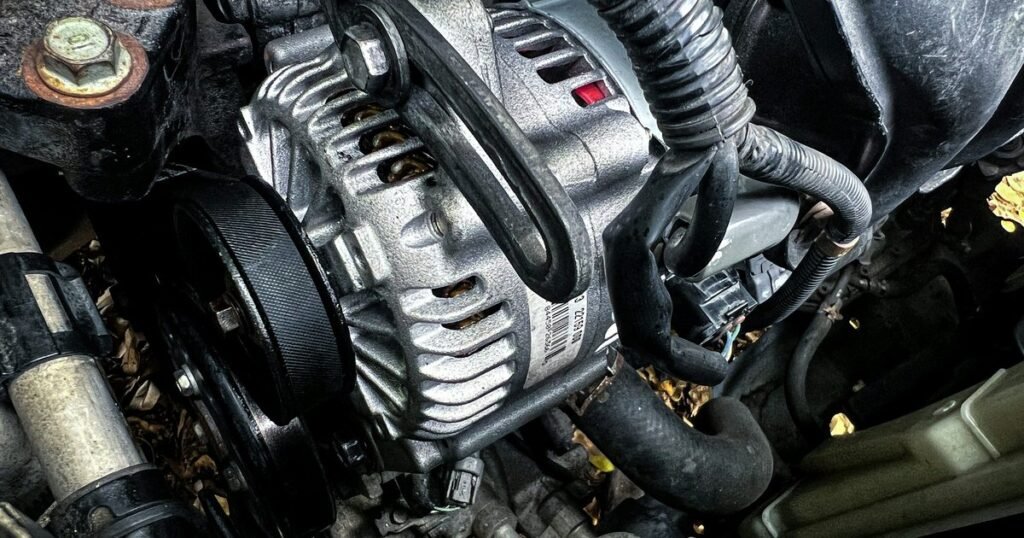
Your alternator is the part that keeps your car’s electrical system alive while you drive. When it fails, the battery drains fast — and you can end up stranded. The good news: alternator replacement is one of the more predictable car repairs, and you can know the price before you walk into the shop.
Quick answer: Replacing an alternator costs $500 to $1,000 on average in 2026, including parts and labor. The alternator itself runs $350–$650; labor adds another $150–$350 for 1–2 hours of shop time. Luxury and European cars cost more ($700–$1,200+), while a DIY job with a remanufactured part can drop the total under $300.
How Much Does It Cost to Replace an Alternator?
Here’s what the bill usually looks like, by where you get the work done:
| Option | Parts | Labor | Typical total |
|---|---|---|---|
| Independent repair shop | $200–$500 | $150–$250 | $400–$800 |
| Dealership | $350–$650 | $300–$550 | $700–$1,200+ |
| DIY (your own garage) | $150–$500 | $0 | $150–$500 |
Most drivers pay $500–$1,000 at a shop. The dealer is almost always the most expensive option — you’re paying for OEM parts and higher labor rates — while an independent shop with an aftermarket or remanufactured alternator is the sweet spot for most people.
What’s included in the price: the alternator itself, labor to remove and reinstall it, and usually shop supplies (cleaner, hardware) plus tax. Most shops also test the battery and charging system afterward, which should be part of the service — a dying battery can kill a new alternator, so this step matters.
Alternator Replacement Cost by Vehicle Type
The alternator part and the labor time both depend on your car. A compact sedan with an easy-to-reach alternator is a quick job; a European SUV with a cramped engine bay takes longer and needs a pricier part.
| Vehicle type | Parts | Labor | Typical total |
|---|---|---|---|
| Economy sedan / compact (Civic, Corolla) | $200–$400 | $150–$250 | $400–$650 |
| Midsize sedan / small SUV (Camry, RAV4) | $250–$500 | $150–$300 | $450–$800 |
| Full-size truck / large SUV (F-150, Tahoe) | $300–$600 | $150–$300 | $500–$900 |
| Luxury / European (BMW, Audi, Mercedes) | $400–$800 | $250–$500 | $700–$1,200+ |
| Hybrid (alternator-integrated designs) | varies widely | $200–$400 | $600–$1,200+ |
Note: many hybrids don’t have a traditional alternator — the inverter handles charging — so costs vary by model. Always get a model-specific quote.
Parts: OEM vs Aftermarket vs Remanufactured
The part you choose is the biggest lever on the price:
- New OEM (from the carmaker, e.g. Denso for Toyota, Bosch for VW): $350–$650. Best fit and longest warranty (usually 2 years), but the most expensive.
- New aftermarket (third-party brands): $200–$450. Often identical in function; warranty usually 1 year. The best value for most drivers.
- Remanufactured (rebuilt used alternator): $150–$350. A rebuilt unit with new bearings, brushes, and diodes. Reliable from reputable rebuilders, and the cheapest way to get back on the road.
For a daily driver, a new aftermarket or quality remanufactured alternator is usually the smart buy. Save the OEM part for cars still under warranty or where exact-match electronics matter.
Signs Your Alternator Is Failing
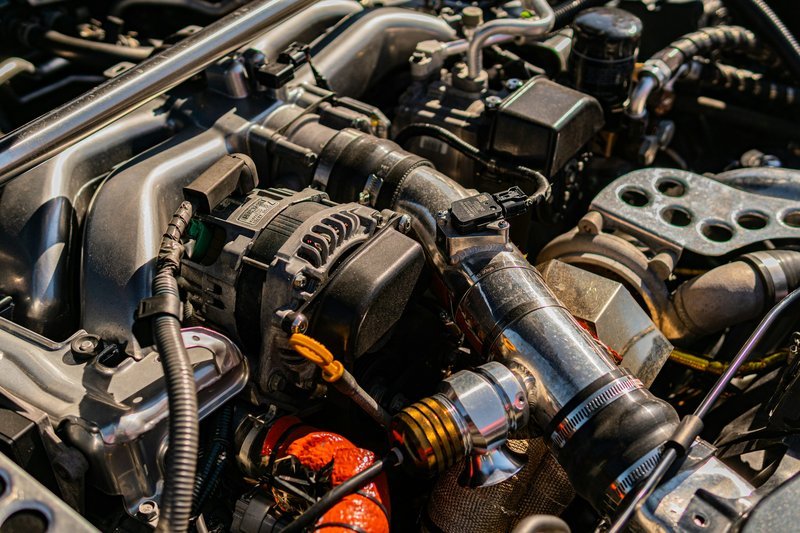
Catch it early and you control the timing — and the price. Watch for:
- Battery warning light on the dashboard (often shaped like a battery)
- Dim or flickering headlights, especially at idle
- Whining, grinding, or growling noise from the engine bay that changes with RPM
- Electrical accessories acting up — slow power windows, weak radio, dashboard lights dimming
- Burning rubber smell — a slipping or misaligned serpentine belt overheats
- Car stalls or won’t restart after being jump-started (the battery isn’t being recharged)
If the battery light comes on while driving, you typically have 20–30 minutes of driving before the battery dies. Turn off the AC, radio, and heated seats, and head to a shop — don’t run errands.
What Affects the Cost
- Vehicle make and model — European and luxury parts cost more, and tight engine bays add labor time.
- Part choice — OEM vs aftermarket vs remanufactured (see table above).
- Labor rates — $75–$150/hour is typical; big cities and dealerships sit at the top.
- Labor time — most cars take 1–2 hours; some need 2–3 hours because the alternator is buried under other components.
- Location — expect 10–20% higher bills in high-cost metro areas.
- Voltage regulator — on many cars it’s built into the alternator (no extra cost). On a few models it’s a separate, serviceable part ($50–$150) — worth asking about before authorizing a full replacement.
Alternator Belt Replacement Cost
The alternator is driven by the serpentine belt (also called the drive belt). Because the belt has to come off anyway to reach the alternator, most mechanics recommend replacing it at the same time — and it’s cheap insurance:
- Belt part: $25–$75
- Labor: $50–$125 (minimal extra labor when the alternator is already out)
- Total: $75–$200
If the belt is cracked, glazed, or squealing, replace it during the alternator job. Paying for the labor twice — once now, once when the old belt snaps — costs far more.
Alternator vs Battery vs Starter: Which One Is Bad?
These three get confused constantly, and replacing the wrong one wastes hundreds of dollars. Here’s how they differ:
| Symptom | Likely culprit |
|---|---|
| Car won’t start, no crank, no lights | Dead battery |
| Car starts with a jump but dies again while driving | Bad alternator |
| Single loud click when turning the key, lights work fine | Bad starter |
| Car cranks slowly, especially in the cold | Weak battery |
| Battery light on the dash while driving | Bad alternator |
Rule of thumb: the battery starts the car, the alternator keeps it running, and the starter turns the engine over. Before authorizing an alternator replacement, ask the shop to do a charging-system test — it checks the battery, alternator output, and starter draw in about 15 minutes, and most shops do it free or cheap. That one test prevents the classic mistake of replacing the alternator when the battery was the problem.
Can You Replace an Alternator Yourself?
Yes — it’s one of the more approachable DIY repairs, typically rated 3 out of 10 in difficulty:
- DIY parts cost: $150–$500 (remanufactured at the low end, new aftermarket in the middle)
- Tools: basic socket set, wrenches, and a belt-tensioner tool (often rentable free at auto parts stores)
- Time: 1–3 hours for a first-timer
Safety non-negotiables: disconnect the negative battery terminal first, never work on a hot engine, and keep the new alternator’s pulley aligned with the belt. If your car requires removing the radiator, motor mount, or other major components to reach the alternator — common on some European models — leave it to a professional. One misrouted serpentine belt can destroy the new alternator in minutes.
How to Save Money on Alternator Replacement
- Get 2–3 quotes. Prices for the same job vary wildly between shops — a 10-minute call can save $150.
- Choose an independent shop over the dealer. Same job, often 30–40% less.
- Ask about remanufactured parts. A quality rebuilt alternator costs half of new and works just as well.
- Replace the serpentine belt at the same time. $75–$200 now beats paying full labor again later.
- Check for a separate voltage regulator. If your car’s regulator is serviceable, that $50–$150 part might be all you need.
- Don’t drive on a dying alternator. Getting stranded means a tow ($75–$150) on top of the repair — and a deeply discharged battery may need replacing too.
How Long Does an Alternator Last?
A typical alternator lasts 7–10 years or 100,000–150,000 miles. Heat, oil leaks, and constant high electrical loads (big sound systems, lots of short trips) shorten its life. There’s no maintenance schedule for it — it either works or it doesn’t — but keeping the serpentine belt in good shape and the battery healthy gives it the easiest possible life.
Frequently Asked Questions
How much does it cost to replace an alternator?
On average, $500–$1,000 including parts and labor. The alternator itself costs $350–$650 (new), and labor runs $150–$350 for 1–2 hours of shop time. Independent shops are usually $400–$800; dealerships $700–$1,200+.
Can I drive with a bad alternator?
Briefly. Once the battery light comes on, you typically have 20–30 minutes before the battery dies. Turn off all accessories and drive straight to a shop — don’t risk getting stranded.
Is it worth replacing the alternator or should I get a new car?
Almost always worth replacing. Even at $1,000, an alternator job is a fraction of a car payment, and the car typically runs fine for years afterward.
How long does it take to replace an alternator?
About 1–2 hours at a shop. DIY takes 1–3 hours depending on experience and how accessible the alternator is in your engine bay.
Do I need to replace the battery too?
Not always, but get it tested. A failing battery overworks the alternator and can kill the new one. If the battery is more than 4–5 years old or fails the load test, replace it.
What’s the difference between a new and remanufactured alternator?
A remanufactured alternator is a used unit rebuilt with new internal components (bearings, brushes, diodes). From a reputable rebuilder it performs like new and costs $150–$350 — roughly half the price of new.
Why is the dealer quote so much higher?
Dealers use OEM parts ($350–$650) and charge higher labor rates ($120–$180/hour vs $75–$150 at independent shops). For out-of-warranty cars, an independent shop usually delivers the same result for 30–40% less.
Sources & methodology
Cost ranges reflect typical US shop and parts-store pricing in 2026 (labor $75–$150/hr; parts from major aftermarket and OEM catalogs). Actual prices vary by vehicle, region, and part choice — treat these as planning estimates and confirm with a written quote.
Disclaimer: This guide is for informational purposes only and is not professional automotive advi