
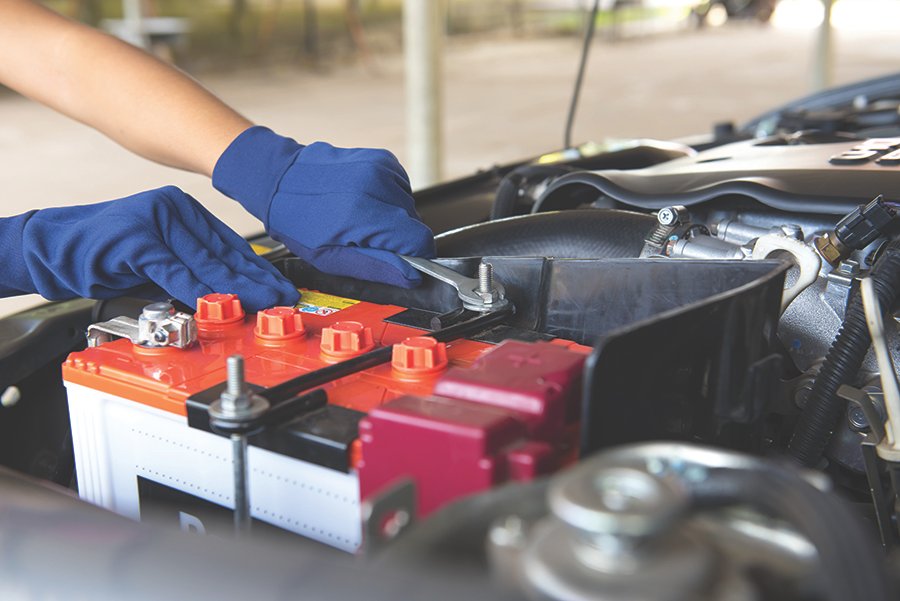
The short version: disconnect the negative (–) terminal first, then the positive (+), lift out the old battery, drop in the new one, reconnect positive first and negative last, then start the car to confirm it’s working. With basic tools, most drivers can do this in 15–20 minutes without a mechanic. Here’s the full walkthrough, plus how to tell it’s actually time, what it should cost, and the mistakes worth avoiding.
Table of Contents
Signs Your Battery Needs Replacing
- The engine cranks slowly or struggles to turn over
- Headlights or dashboard lights dim or flicker at idle
- The battery case looks swollen, bloated, or is leaking
- A rotten-egg smell near the engine bay
- The battery is 3+ years old — heat shortens battery life significantly. AAA reports batteries typically last around three years in hot southern climates versus five years or longer in cooler northern ones, so don’t wait for a total failure if you live somewhere hot.
What You’ll Need
| Item | Why |
|---|---|
| New battery (correct group size) | Check your owner’s manual or the old battery’s label — the wrong size won’t fit or connect properly |
| Wrench or socket set (usually 10mm) | To loosen the terminal clamps |
| Gloves and eye protection | Battery acid and sparks are real risks |
| Wire brush or terminal cleaner | Clears corrosion so the new connection is solid |
| Rag or towel | Cleanup |
Step-by-Step Instructions
- Park and power down. Turn off the ignition, remove the key, and put on gloves and eye protection.
- Locate the battery. Usually under the hood at the front — but some hybrids and European models keep it in the trunk or under a seat. Check your manual if you’re not sure.
- Disconnect the negative terminal first. Loosen the clamp on the negative (–) terminal and move the cable clear. Negative first avoids accidental short-circuits.
- Disconnect the positive terminal. Loosen and remove the positive (+) cable the same way.
- Remove the retaining bracket, then lift the battery straight out. It’s heavy — usually 30–50 lbs — so lift with your legs, not your back.
- Clean the tray and cable clamps. Wipe down the tray and brush off any corrosion before the new battery goes in.
- Install the new battery in the same orientation as the old one, then re-secure the bracket.
- Reconnect positive first, negative last — the reverse of removal, always. Make sure both clamps are snug and don’t wiggle.
- Start the car. It should start smoothly, and any dashboard warning lights should clear after a short drive.
Does Your Car Have a Start-Stop System? Read This First
If your car automatically shuts the engine off at stoplights and restarts it (a “start-stop” or “stop-start” system), it very likely needs an AGM (Absorbent Glass Mat) battery, not a standard flooded one — the electrical demands are higher. Putting a standard battery in a start-stop vehicle can shorten its life or cause the start-stop feature to stop working. Check your owner’s manual or the label on your current battery before buying a replacement. Beyond that, the swap itself follows the same steps above — you don’t need a mechanic just because your car has this feature.
Common Mistakes to Avoid
- Wrong terminal order — always negative off first, negative on last
- Letting a metal tool touch both terminals at once — this can spark or short-circuit the system
- Buying the wrong group size — double-check the old battery’s label
- Tossing the old battery in the trash — most auto parts stores recycle it for free, sometimes with a small credit toward the new one
How Much Does It Cost?
| Option | Typical cost |
|---|---|
| Standard battery, DIY (parts only) | ~$100–$200 |
| AGM/start-stop battery, DIY (parts only) | ~$200–$350 |
| Professionally installed (parts + labor) | ~$270–$370 |
Cost ranges based on Jerry’s national auto repair cost data and typical standard-vs-AGM pricing; your exact price depends on vehicle, battery brand, and location. Many auto parts stores install the battery for free if you buy it there.
Frequently Asked Questions
Which battery terminal do you take off first?
The negative (–) terminal, always. Disconnecting negative first — and reconnecting it last — avoids the risk of a short circuit while you’re working.
Can I replace my car battery myself, or is it safe to?
Yes, for the vast majority of vehicles — it’s one of the easier DIY car jobs. Just follow the terminal order above, wear gloves and eye protection, and never let a metal tool touch both terminals at once.
Will AutoZone (or a similar auto parts store) change my battery for me?
Many auto parts stores will install a battery for free if you buy it there — worth asking when you check the price, especially if you’d rather not do it yourself.
Will I lose my radio presets or clock after disconnecting the battery?
Possibly — some cars reset the clock and radio presets when the battery is disconnected. A small memory-saver device (plugged into the OBD-II or cigarette lighter port before you disconnect) prevents this, or just jot down your presets beforehand.
Related: if you’re already dealing with car trouble, here’s how to jump start a car and how to change a flat tire.
Last updated: September 2026
Sources and further reading
This article was researched and fact-checked by the AutoExpertsHub editorial team against the sources above and manufacturer documentation. Learn how we work in our Editorial Policy. Spotted an error? Let us know.