
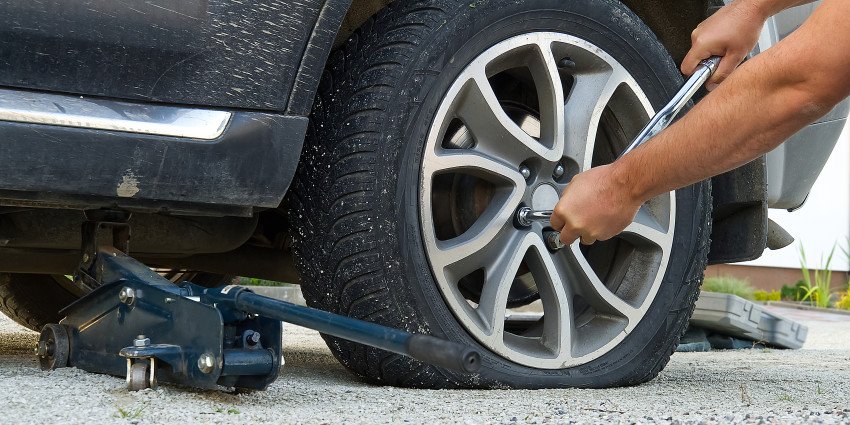

How Do You Change a Flat Tire?
To change a flat tire: pull over to a flat, safe area away from traffic, turn on your hazard lights, and engage the parking brake. Loosen the lug nuts slightly while the tire is still on the ground, then lift the car with a jack at the correct jacking point. Remove the lug nuts fully, pull off the flat tire, mount the spare, and hand-tighten the lug nuts in a star pattern before lowering the car and fully tightening them. The whole process takes about 10–15 minutes with basic tools.
According to AAA, nearly one in five U.S. drivers don’t know how to change a flat tire — the steps below walk through exactly how, plus the safety mistakes that cause most roadside injuries.
Table of Contents
What You’ll Need
| Item | Why |
|---|---|
| Spare tire (properly inflated) | Usually stored in the trunk or underneath the vehicle |
| Jack | Lifts the car off the ground |
| Lug wrench | Loosens and tightens lug nuts |
| Wheel wedges (or large rocks) | Prevents the car from rolling while jacked up |
| Owner’s manual | Shows your car’s exact jacking points |
Step-by-Step Instructions
1. Find a safe spot. Don’t brake suddenly. Slow down gradually and pull onto a flat, wide shoulder or parking lot — away from traffic and curves.
2. Take safety precautions. Put the car in Park (or Reverse for manual transmissions), engage the parking brake, and turn on your hazards. Have passengers exit and stand well away from the road.
3. Gather your tools. Pull the spare, jack, and lug wrench from the trunk or undercarriage. Check your owner’s manual for your vehicle’s specific jacking points.
4. Loosen the lug nuts slightly. Do this before jacking up the car — the tire’s grip on the ground stops it from spinning while you break the nuts loose. Don’t remove them yet.
5. Position the jack and lift the car. Place the jack under the correct jacking point (check your manual — using the wrong spot can damage the frame). Raise the car until the flat tire is a few inches off the ground.
6. Remove the lug nuts and the flat tire. Fully unscrew the nuts and pull the tire straight toward you off the wheel hub.
7. Mount the spare tire. Line it up with the wheel hub and push it into place.
8. Hand-tighten the lug nuts in a star pattern. This means tightening opposite nuts in sequence, not going around in a circle — it seats the wheel evenly.
9. Lower the car and fully tighten. Once the car is back on the ground, use your body weight on the wrench to fully tighten each lug nut in the same star pattern.
10. Check the spare’s pressure and drive carefully. Most spares are “donuts” — rated for lower speeds (usually under 50 mph) and shorter distances. Get the flat repaired or replaced as soon as possible.
Common Mistakes to Avoid
- Loosening lug nuts after jacking up the car — the wheel will just spin freely.
- Using the wrong jacking point — this can dent or bend the car’s frame.
- Tightening lug nuts in a circle instead of a star pattern — this can seat the wheel unevenly.
- Driving long distances on a donut spare — they’re a temporary fix, not a full replacement.
When to Call for Help Instead
Changing a tire yourself isn’t always the right call. Consider roadside assistance if:
- You’re on a narrow shoulder or busy highway
- It’s dark, raining, or icy
- You don’t have a working jack or spare
- You’re unsure about any part of the process
Frequently Asked Questions
Can I drive on a flat tire to reach a safer spot?
A short distance at low speed is fine if you truly can’t stop safely, but driving on a flat can destroy the tire and damage the wheel rim.
How fast can I drive on a spare tire?
Most compact “donut” spares are rated for a maximum of 50 mph and shorter trips — check the sidewall of your specific spare.
Do all cars come with a spare tire?
No — many newer vehicles come with a tire repair kit or run-flat tires instead of a traditional spare. Check your trunk or owner’s manual to confirm what your car has.
How do I know which jacking point to use?
Check your owner’s manual — using the wrong point can damage the vehicle’s underbody, and using a jack incorrectly is a common cause of tire-changing injuries.