
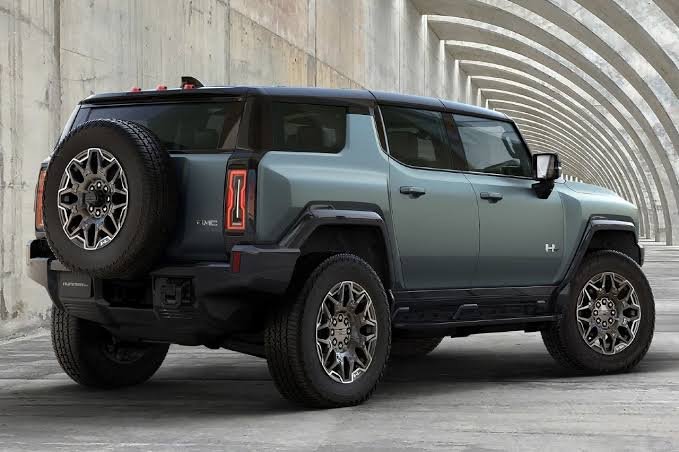

Hummer EV Charge Time Calculator
Work out charging time and cost for your pack, charger and starting charge
Short answer: On a home Level 2 charger, a GMC Hummer EV takes roughly 9 to 14 hours to charge from empty to full on a high-amperage circuit, and up to 22–27 hours on a standard 40-amp setup. On a DC fast charger, you can add about 100 miles of range in 10–12 minutes, and go from 10% to 80% in roughly 35–45 minutes.
The Hummer EV takes longer than almost any other electric vehicle to charge, and the reason is simple: it has the biggest battery pack GMC has ever put in a production vehicle. Below is what that means in practice, broken down by charger type, pack size, and what you’ll actually experience rather than what the spec sheet promises.
Table of Contents
First: Which Battery Do You Have?
Charging time depends more on your pack size than anything else, and the Hummer EV comes in two configurations:
| Pack | Capacity | Which trims |
|---|---|---|
| Standard (20-module) | ~170 kWh | Pickup 2X and 3X, SUV 2X and 3X |
| Extended (24-module) | ~212 kWh | Pickup 3X only (optional) |
The 24-module pack is the largest battery in any GM production vehicle, and it’s a major reason the Hummer EV weighs over 9,000 pounds. The SUV isn’t offered with it at all. Full specifications for each trim are listed on GMC’s official Hummer EV page.
For comparison, a Tesla Model Y has roughly a 75 kWh pack. The Hummer’s extended pack is nearly three times larger — which is exactly why the charging times below look so different from other EVs.
Charging Times by Charger Type
Level 1 (standard 120V household outlet)
Not practical for this vehicle. A regular wall outlet delivers around 1.4 kW, which works out to roughly 2 to 4 miles of range per hour. Filling a 170 kWh pack from empty would take about five days of continuous charging.
Level 1 is fine as an emergency backup or for topping up a few miles overnight. It is not a realistic way to own a Hummer EV.
Level 2 (240V home charger)
This is how most owners actually charge, and the time varies enormously depending on your home circuit:
| Circuit | Power delivered | 170 kWh pack | 212 kWh pack |
|---|---|---|---|
| 40A circuit | ~7.7 kW | ~24–26 hours | ~30–33 hours |
| 60A circuit | ~11.5 kW | ~16–18 hours | ~20–22 hours |
| 80A circuit | ~19.2 kW | ~10–12 hours | ~12–14 hours |
This is the single most important thing to understand about owning a Hummer EV: a standard 40-amp home charger — the setup most EV owners install — will not fully recharge this truck overnight. If you regularly run the battery low, you need an 80-amp circuit and a charger capable of 19.2 kW.
The figures above include roughly 10% charging loss, which is why they’re slightly higher than simple division would suggest. Energy is lost as heat in the charger and the battery’s thermal management system.
DC Fast Charging (public rapid chargers)
This is where the Hummer EV genuinely shines. The Ultium pack switches to an 800-volt configuration during DC fast charging, which allows very high peak power:
- Pickup: up to 350 kW peak
- SUV: up to 300 kW peak
In practice that means:
- ~100 miles of range in 10–12 minutes at peak power
- 10% to 80% in roughly 35–45 minutes
- 0% to 100% in over an hour, though almost nobody charges this way
Real-world testing typically shows average power of around 180–240 kW between low state of charge and about 50%, rather than a sustained 350 kW. Peak figures only hold for a short window.
Why the Last 20% Takes So Long
If you’ve noticed that going from 80% to 100% seems to take forever, that’s by design, not a fault.
As the battery fills, the charge controller deliberately reduces the charging rate to limit heat buildup and protect long-term battery health. On a Hummer EV, the final 20% can take as long as the first 50%.
This is why experienced owners on road trips make several shorter stops between 20% and 80% rather than one long stop to full. You cover more miles per minute spent plugged in. This is standard practice for all EVs, not something specific to the Hummer.
What Affects Your Real Charging Time
The numbers above are best-case. Several things push them higher:
- Cold weather. A cold battery charges significantly slower. Precondition the pack while still plugged in before a fast-charging stop.
- Hot weather. The opposite problem — a hot pack also throttles charging speed to protect itself.
- Charger sharing. Many public stations split power between two vehicles on the same unit. Your 350 kW station may deliver half that.
- Starting state of charge. Charging is fastest at low percentages and tapers as the pack fills.
- Charger rating. A 150 kW station will never deliver 350 kW, regardless of what your truck supports.
What Does It Cost to Charge a Hummer EV?
At home, using the 2026 US average residential rate of about 18 cents per kWh:
- 170 kWh pack, empty to full: roughly $31
- 212 kWh pack, empty to full: roughly $38
Your actual cost varies a lot by state. At Washington’s rates you’d pay closer to $23; in California, over $55 for the same charge. Current residential rates for every state are published monthly by the US Energy Information Administration. Check your own bill too — divide your total monthly cost by kWh used to get your real effective rate.
Public DC fast charging typically costs around three times more per kWh than home charging, which can push a full charge past $90. As with any EV, the economics strongly favor charging at home and using fast chargers only for travel.
Charging Port: CCS or NACS?
Through the 2026 model year, the Hummer EV uses a CCS port. GM has scheduled native NACS (the Tesla-style connector) to become standard from the 2027 model year.
If you have a CCS-equipped Hummer and want to use Tesla Superchargers, you’ll need a GM-approved NACS adapter. Check your specific vehicle and the current adapter availability with your dealer, since this transition is still in progress.
Before a long trip, it’s worth checking which connector types and power ratings are actually available along your route. PlugShare maps public stations by network, connector and speed, with recent user reports on whether each one is working.
Frequently Asked Questions
How long does it take to charge a Hummer EV from empty to full?
On a home Level 2 charger it ranges from about 10 hours on an 80-amp circuit to over 30 hours on a 40-amp circuit, depending on your pack size. On DC fast charging, over an hour — though charging to 100% on a fast charger is rarely worth the time.
Can I charge a Hummer EV on a normal household outlet?
Technically yes, practically no. Level 1 charging adds 2–4 miles of range per hour, meaning a full charge would take around five days. Treat it as an emergency option only.
What size home charger do I need for a Hummer EV?
For overnight full charging, you want an 80-amp circuit with a charger capable of 19.2 kW. A standard 40-amp installation will work but won’t fully recharge a depleted pack overnight.
How much range does the Hummer EV add per hour of Level 2 charging?
Roughly 7 to 30 miles per hour depending on your circuit. The Hummer’s low efficiency — around 1.6 miles per kWh — means it gains range more slowly than lighter EVs on the same charger.
Does fast charging damage the Hummer EV battery?
Occasional DC fast charging is fine and the vehicle actively manages pack temperature to protect itself. As with all EVs, relying on fast charging as your primary method every day is harder on the battery than home Level 2 charging.
Why does my Hummer EV charge slower than the advertised 350 kW?
Peak power is only available in a narrow window at low state of charge, with a warm battery, on a fully capable charger that isn’t sharing power with another vehicle. Average real-world rates of 180–240 kW are normal.
Related Reading
- Fuel Cost Calculator — comparing running costs against a gas vehicle.
- Car Comparison Calculator — see how two vehicles stack up on running cost over the same distance.
Specifications vary by model year and trim. Verify figures for your specific vehicle against your owner’s manual or with a GMC dealer before making purchase or installation decisions.