
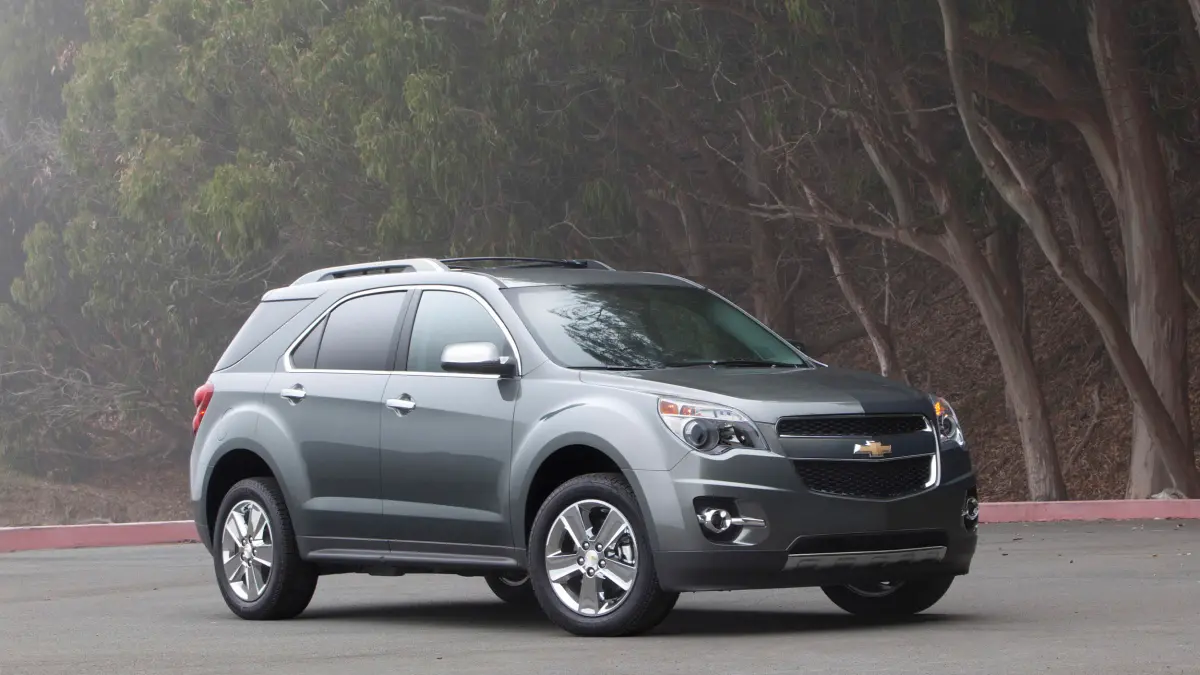

Short answer: Avoid the 2010–2013 Chevy Equinox with the 2.4L four-cylinder, and be equally careful with 2014–2017 models running the same engine. The best used buys are 2018 onward, plus any 2013–2017 model fitted with the 3.6L V6.
Most guides tell you to avoid 2010–2013 and treat everything after that as safe. That advice is incomplete, and it can cost you an engine.
The Equinox’s central problem was never really about model years. It was about one specific engine — the 2.4L Ecotec — and that engine stayed in the lineup until 2017. A 2016 Equinox with the 2.4L carries the same design flaw as a 2012. A 2013 with the V6 doesn’t have it at all.
Below is the year-by-year breakdown you came for, followed by what actually matters: how to tell which engine is in the specific car you’re looking at.
Table of Contents
The Root Cause: The 2.4L Ecotec
GM used low-tension piston rings in the 2.4L Ecotec to reduce friction and improve fuel economy. In practice, those rings failed to seal the combustion chamber properly, letting oil slip past and burn off during combustion.
The result is excessive oil consumption — owners report burning a quart every 1,000 to 2,000 miles, against a normal figure of a quart every 5,000 or more. Because most people don’t check oil between changes, the engine gradually runs low, wears its bearings, and in the worst cases seizes entirely.
GM acknowledged this in technical service bulletin 15285C, which described 2.4L vehicles exhibiting excessive oil consumption due to piston ring wear. GM later issued Special Coverage Adjustments extending warranty coverage to 7.5 years or 120,000 miles for 2010–2012 owners.
Two engine codes matter here: LAF (2010–2011) and LEA (2012–2017). Both are the 2.4L, and both are affected. The E85-compatible LEA was not a fix for the oil problem.
Chevy Equinox Years to Avoid
2010–2013 — Avoid
These are the years everyone agrees on, and for good reason. The 2.4L in this range generated the bulk of NHTSA complaints for the nameplate.
- Excessive oil consumption from piston ring failure, often starting between 25,000 and 50,000 miles
- Engine seizure in severe cases, typically reported between 60,000 and 120,000 miles
- Timing chain failure on the 3.0L V6 (2010–2012) — a separate issue from the four-cylinder’s
- A/C compressor failure, particularly on 2011 models
- Windshield defrost/defog faults that led to recalls on the 2010
A class action covering 2010–2013 Equinox and Terrain models with the 2.4L reached final approval in November 2019. Reimbursement was distributed, and the claims window for that particular settlement has closed.
2014–2017 — The Years Most Guides Get Wrong
This is where the standard advice falls apart.
The 2.4L Ecotec continued in the Equinox through 2017. A class action filed in January 2024 alleges that 2014–2017 Equinox and Terrain models with the same engine suffer the same oil consumption defect, and notes that the earlier settlement covered only 2010–2013 vehicles.
The practical implication is uncomfortable but worth stating plainly: a 2014–2017 Equinox with the 2.4L may carry similar risk to a 2012, without the settlement coverage or the extended Special Coverage that earlier owners received. Owner forum reports from 2015 models describe exactly the same symptoms and the same refusal of coverage.
That doesn’t make every 2014–2017 four-cylinder a bad car. GM made production changes over time and many run fine. But treating these years as automatically safe — as most guides do — is not supported by the complaint history.
2005–2008 — Avoid If You Can
First-generation models are now old enough that condition matters more than model year, but this range attracted complaints for transmission problems and general age-related wear. At this price point, a thorough inspection tells you far more than any year-based rule.
Which Equinox Engines Are Actually Fine
| Engine | Years | Verdict |
|---|---|---|
| 2.4L Ecotec (LAF/LEA) | 2010–2017 | The problem engine — oil consumption |
| 3.0L V6 (LF1) | 2010–2012 | Avoids oil issue, but timing chain failures reported |
| 3.6L V6 (LFX) | 2013–2017 | Solid — neither problem applies |
| 1.5L turbo / 2.0L turbo | 2018+ | Solid — third generation is much improved |
This table is the actual buying guide. A 2013–2017 Equinox with the 3.6L V6 is a genuinely reasonable used buy, despite falling inside the years most articles tell you to avoid outright.
How to Check Which Engine a Car Has
Before you dismiss or accept any Equinox, confirm the engine. It takes two minutes.
Look under the hood. A V6 and an inline-four are visually distinct — the four-cylinder is noticeably narrower with the engine cover running lengthwise.
Run the VIN. On GM vehicles the eighth character of the VIN identifies the engine. The free NHTSA VIN decoder will tell you the engine and displacement from the VIN alone, along with any open recalls.
Check the window sticker or build sheet if the seller has it — engine displacement is listed directly.
If it’s a 2.4L from any year between 2010 and 2017, treat it as a car that needs the checks below, regardless of what the model year suggests.
Inspecting a 2.4L Equinox Before You Buy
If you’re set on one — and there are good deals out there precisely because of this reputation — these checks separate a healthy example from an expensive one.
Check the oil level yourself, cold. Not the seller’s word. If it’s low and the last oil change sticker is recent, that’s the defect showing.
Ask for oil change records. Frequent top-ups between services, or a pattern of very short intervals, are the pattern to look for.
Look at the exhaust on a cold start. Blue-tinged smoke on startup indicates oil burning in the combustion chamber.
Ask whether the piston rings were replaced. Some cars had this done free under the Special Coverage or settlement. A car with documented ring replacement is genuinely lower risk than an untouched one — this is one of the rare cases where a major engine repair on the history is a good sign.
Scan for codes. Any cheap OBD-II reader will show stored codes. Misfire codes on a 2.4L often trace back to oil fouling.
Do a compression or leak-down test. If you’re serious about the car, this is worth paying a mechanic for. It’s the definitive check on ring condition.
What the Repair Actually Costs
If the rings have failed and it’s out of any coverage:
- Piston and ring replacement: typically several thousand dollars, since the engine has to come apart
- Full engine replacement: commonly quoted in the $4,000–$6,000 range
On a used Equinox worth $5,000–$8,000, either figure can exceed the value of the car. That’s why the inspection matters more here than on most used SUVs — the downside isn’t an inconvenience, it’s a total loss.
Best Chevy Equinox Years to Buy
2018 and newer. The third generation moved to 1.5L and 2.0L turbocharged engines, dropping the 2.4L entirely. Complaint volumes fall sharply from 2018 onward, and these years are the straightforward recommendation.
2013–2017 with the 3.6L V6. Neither the oil consumption nor the timing chain issue applies. These often sell at a discount because of the nameplate’s reputation, which makes them decent value if you find one with good history.
2019–2021 are frequently cited as the sweet spot for a used third-generation buy — modern enough for current safety features, old enough to have taken the depreciation hit.
Frequently Asked Questions
What years should you avoid on a Chevy Equinox?
Avoid 2010–2013 outright. Approach 2014–2017 with caution if fitted with the 2.4L four-cylinder, since the same engine and the same alleged defect carried through those years. 2005–2008 models are old enough that individual condition matters more than the year.
Is the 2013 Chevy Equinox reliable?
It depends entirely on the engine. With the 2.4L four-cylinder, it’s among the worst years for oil consumption complaints. With the 3.6L V6 introduced that year, it avoids both the oil consumption and timing chain issues and is a reasonable buy.
Is a 2016 Chevy Equinox safe to buy?
Only after checking the engine. Many guides list 2016 as safe because it falls outside the 2010–2013 window, but the 2.4L continued through 2017. A 2016 with the V6 is fine; a 2016 with the 2.4L deserves the same inspection as a 2012.
Did GM ever fix the oil consumption problem?
GM made production changes and covered piston replacement for some owners under Special Coverage Adjustments and the 2019 settlement, but coverage was limited to specific years and VINs. The problem was fully resolved only when the 2.4L left the lineup after 2017.
Can I still claim compensation for oil consumption?
The 2010–2013 settlement received final approval in November 2019 and its claims window has closed. A separate action covering 2014–2017 models was filed in 2024 — check its current status, as litigation of this kind takes years and eligibility depends on the outcome.
How many miles will a Chevy Equinox last?
A well-maintained example from a good year commonly reaches 150,000 to 200,000 miles. Affected 2.4L cars frequently fail far earlier — reports of engine failure between 80,000 and 120,000 miles are common where oil consumption went unaddressed.
Is the Chevy Equinox a reliable SUV overall?
It’s a vehicle of extremes rather than a consistently good or bad one. Third-generation models have solid records. Second-generation four-cylinders have one of the more serious engine defects in the segment. Which one you get matters more than the badge.
Related Reading
- Car Comparison Calculator — compare running costs between two vehicles you’re considering.
- Fuel Cost Calculator — work out what a given MPG figure actually costs you per year.
Reliability information is based on published NHTSA complaint data, GM technical service bulletins and court filings. Individual vehicles vary — always have a used car inspected by an independent mechanic before purchase. Litigation status can change; verify current details before relying on them. Last reviewed: September 2026.